
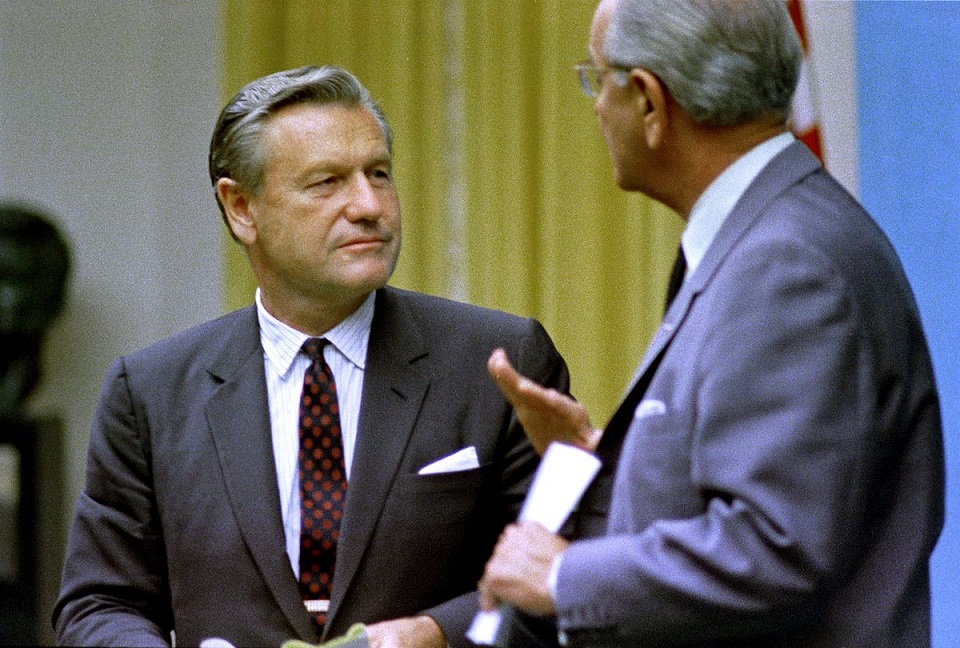
This first step into politics would see Nelson hold many political positions such as Assistant Secretary of State for American Republic Affairs, Chairman of the International Development Advisory Board, Special Assistant to the President for Foreign Affairs before resigning from federal politics in 1956 to concentrate on New York State and national politics.
By 1959, with a characteristically well funded campaign, he was elected as Republican governor of New York, winning by an overwhelming majority of over 570,000 votes. Despite his obvious wealth, influence and bids in 1960, 64 and 68, he would never attain the position he truly wanted, the office of the President of the United States.
In the aftermath of the Watergate scandal and the subsequent resignation of Richard Nixon, the newly appointed Gerald Ford would select Nelson as his vice president.
Unfortunately for Nelson, after Ford was nominated at the 1976 Republican National Convention, many prominent conservative Republicans stated they would only lend their support if Ford chose another running mate. Seeing the writing on the wall Nelson withdrew and would concentrate on his philanthropy instead.
The last of the Rockefeller clan to hold public office would be the great-grandson of John D. Rockefeller, Jay Rockefeller, who would serve two terms as governor of West Virginia before being elected to the U.S. Senate.
By 2012, he had been reelected four times and just two years later he would not seek reelection. The final political player in the Rockefeller dynasty had the distinction of being the only member that held office as a Democrat in a predominately Republican family.