Jensen Huang’s sudden departure from Nvidia presents Donald Trump with a severe national security crisis. If you track federal oversight and technology policy, you now face a major realignment in Washington.
Federal investigators are probing an alleged espionage operation targeting the world’s most critical microchip architect. Meanwhile, incoming congressional leaders are demanding answers regarding executive branch decisions that favored the technology giant.
The fallout threatens to unravel key administration trade initiatives and exposes vulnerable foreign policy choices. Here is how this Silicon Valley scandal reaches the Oval Office and what it means for your portfolio and national security.
The Opening Flashpoint: A Corporate Fall Becomes a Political Firestorm
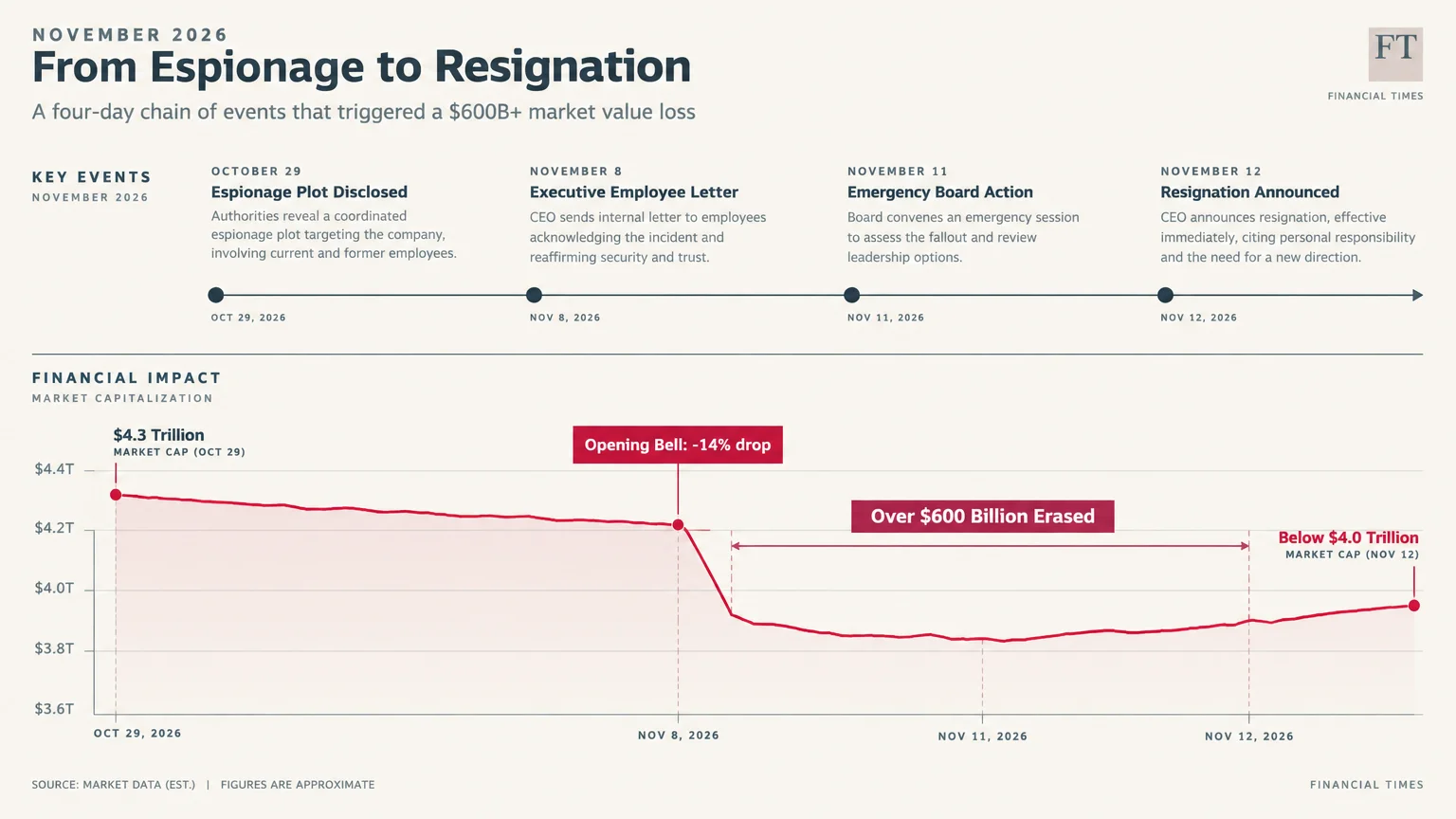
Jensen Huang ended his 33-year tenure leading Nvidia by resigning on November 12, 2026. This sudden departure followed an emergency board meeting convened on November 11.
The resignation capped a rapid sequence of national security disclosures and corporate governance failures. On October 29, 2026, reports revealed that Huang was the target of an alleged Chinese espionage plot.
U.S. intelligence sources alleged that Alice Huang, a Chinese national, cultivated an extramarital affair with Huang. Investigators suspect China’s Ministry of State Security recruited her to acquire advanced artificial intelligence chips.
Alice Huang served as an executive at Megaspeed, a Singapore-based cloud computing enterprise. That firm operated as Nvidia’s central distribution partner across Southeast Asia.
Huang addressed the controversy in a November 8, 2026 letter to Nvidia employees. He admitted to marital infidelity and pledged complete cooperation with federal law enforcement authorities.
Nvidia’s board concurrently launched an independent internal investigation to determine whether foreign agents compromised corporate secrets. However, additional personal disclosures swiftly undermined Huang’s executive standing.
On November 11, 2026, investigative reports disclosed a second affair involving Kimberly Powell, Nvidia’s Vice President of Health Care. Surveillance footage from March 2026 captured the two executives at a San Jose hotel.
Reuters reported another undisclosed workplace affair involving an anonymous employee on November 12. These compound revelations made Huang’s position untenable and forced the emergency board action.
Financial markets absorbed an immediate and punishing blow. On November 12, 2026, Nvidia shares tumbled 14% at the opening bell.
The rapid selloff erased more than $600 billion from Nvidia’s market valuation in days. This collapse pushed the company’s valuation below $4 trillion for the first time since July 2025.
The market rout eroded gains from earlier in the week, when Nvidia stood near $4.3 trillion. The sudden erosion of value quickly translated into intense political scrutiny for the White House.
President Donald Trump attempted to control the narrative during a White House press briefing. Trump confirmed that the FBI is actively investigating the espionage allegations.
The president defended Huang as a “great guy” and insisted the former chief executive possessed no malicious intent. Trump claimed Huang had “absolutely no idea” his companion was an alleged foreign agent.
Trump also stated that he did not recall intelligence briefings regarding the matter. Yet that assertion directly contradicts accounts from senior intelligence officials who documented the warnings.
On November 12, 2026, Attorney General Todd Blanche stated that the Department of Justice has reached no definitive conclusion on Alice Huang. Nevertheless, the political repercussions are already expanding rapidly.
If you assess White House liability, the core issue is not Huang’s private conduct. The danger for Trump lies in the executive policy decisions made while foreign intelligence circled his close corporate ally.
The Power Map: Who Pulls the Levers in Washington and Silicon Valley
The Silicon Valley Shakeup
Following Huang’s exit, Nvidia acted quickly to reassure nervous investors and federal regulators. The board appointed Executive Vice President and Chief Financial Officer Colette Kress as interim chief executive officer.
Simultaneously, the company named veteran venture investor Harvey C. Jones as its first-ever board chair. These leaders now confront severe legal exposure that extends far beyond internal personnel matters.
The primary operational concern centers on Megaspeed, an entity founded in 2023. Megaspeed amassed an enormous $4.8 billion stockpile of advanced Nvidia microchips in Southeast Asia.
Federal investigators are determining whether Megaspeed functioned as an illicit conduit for Chinese entities seeking prohibited hardware. If you monitor semiconductor supply chains, this probe threatens to disrupt regional distribution entirely.
Legal pressures are mounting from the private sector as well. On November 10, 2026, institutional investors filed a federal shareholder class-action lawsuit against Nvidia and Huang in California.
The lawsuit alleges that corporate leaders made materially false statements to the public. Plaintiffs argue management deliberately disguised espionage encounters as ordinary commercial customer meetings.
Kress and Jones must stabilize investor sentiment while complying with sweeping federal subpoenas. Their cooperation with investigators could uncover internal corporate records that directly implicate administration officials.
The Executive Branch Coalition
The scandal touches the Oval Office because Huang built an exceptionally close relationship with Trump. Their strategic alliance began during a formal White House summit in January 2025.
Huang solidified this relationship through substantial political patronage. In April 2025, Huang attended an exclusive $1 million-per-person donor dinner hosted at Trump’s Mar-a-Lago resort.
Corporate support expanded further when Nvidia pledged $25 million toward the new ballroom Trump is constructing at the White House. This substantial financial commitment coincided with remarkable diplomatic access.
Huang accompanied the president on multiple high-profile foreign trips. He joined official presidential delegations to Saudi Arabia in May 2025 and the United Kingdom in September 2025.
In May 2026, Huang traveled alongside Trump to China for sensitive bilateral meetings with President Xi Jinping. Throughout this period, Commerce Secretary Howard Lutnick aligned trade policy with Nvidia’s commercial goals.
Commerce Under Secretary Jeff Kessler played a vital operational role in managing regulatory inquiries. However, cabinet-level unity fractured behind closed doors over obvious counterintelligence risks.
Secretary of State Marco Rubio expressed significant alarm regarding foreign espionage threats. Prior to the Beijing summit in May 2026, Rubio circulated an internal memo warning senior officials about Huang.
Rubio based his classified warning on sensitive electronic surveillance. Yet the administration chose to bring Huang on Air Force One despite those unambiguous counterintelligence cautions.
The Incoming Congressional Leadership
Washington’s balance of power shifted dramatically following the November 2026 midterm elections. Democrats won majorities in both the House and Senate, positioning them to assume committee control in January 2027.
Bipartisan pressure is already accelerating prior to the formal transfer of power. Republican Representative Brian Mast announced that Huang agreed to testify before the House Foreign Affairs Committee.
Incoming Senate Majority Leader Chuck Schumer and House Democratic Leader Hakeem Jeffries have demanded comprehensive document preservation orders. They seek all executive records involving semiconductor export approvals and White House communications.
Senate Intelligence Committee leaders, including Senator Mark Warner, are demanding immediate intelligence community briefings. Concurrently, Senators Elizabeth Warren and Chris Coons are investigating whether national security recommendations were corruptly overruled.
This shifting congressional landscape deprives Trump of his legislative firewall. Subpoena power in Democratic hands ensures an unrelenting examination of the administration’s semiconductor policies.
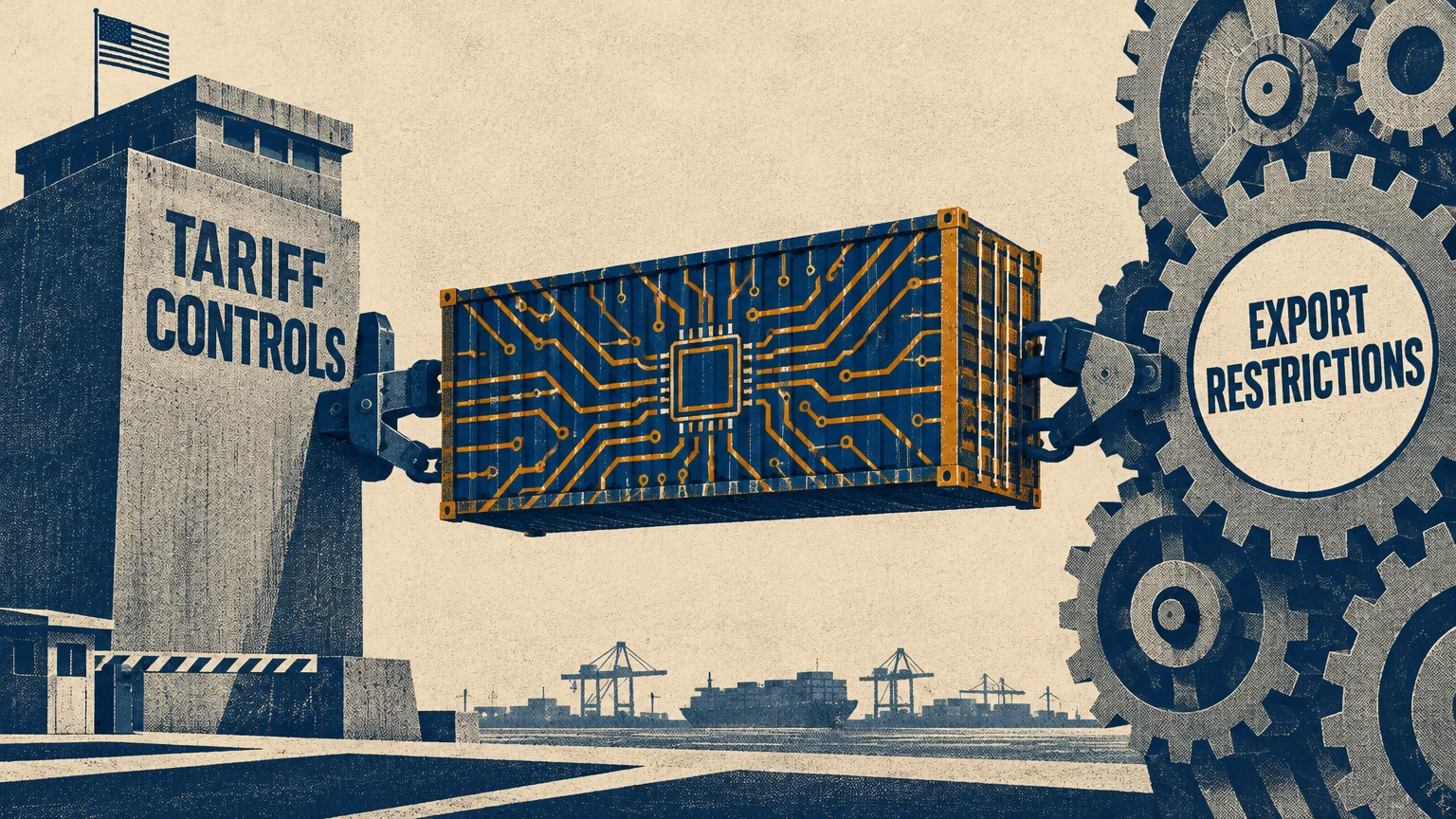
Policy Breakdown: How Export Controls and Tariff Deals Collided
Reversing the AI Diffusion Framework
To understand this scandal’s political potency, you must examine how semiconductor regulations evolved throughout 2025. The Trump administration systematically dismantled the previous AI Diffusion Rule.
That regulatory framework had required specific commercial licenses before companies could export advanced artificial intelligence chips to Southeast Asia. Rescinding the rule eliminated vital friction within global technology distribution networks.
This regulatory retreat allowed Megaspeed to accumulate its $4.8 billion inventory in Singapore without rigorous oversight. Industry watchdogs warned that easing these requirements created an enormous smuggling channel into mainland China.
The White House dismissed those warnings, arguing that deregulation bolstered American commercial dominance. Today, those policy choices look like catastrophic administrative oversights that enabled hostile espionage.
Federal export controls exist to safeguard American technological supremacy. When an administration dismantles those guardrails to favor a corporate benefactor, national security vulnerabilities inevitably follow.
The 25 Percent Export Revenue Share
In late 2025, U.S. intelligence officials formally briefed Trump regarding Alice Huang’s alleged ties to Chinese intelligence. Despite receiving that explicit warning in October 2025, the administration executed an unprecedented policy reversal.
In December 2025, Trump granted Nvidia official authorization to sell its advanced H200 AI processors directly to approved buyers in China. The administration established a case-by-case licensing protocol to govern these shipments.
The transaction included an extraordinary fiscal component. Under this agreement, the federal government captures a 25% cut of all export sales revenue generated by these microchip transactions.
The administration celebrated this mechanism as an innovative revenue stream that monetized foreign demand for American technology. However, congressional critics argue the policy established a perverted institutional incentive.
When the federal government profits directly from corporate exports, national security considerations take a back seat. You now see an administration accused of trading strategic technology advantages for tariff revenue.
This revenue arrangement bypassed standard congressional appropriations processes entirely. Lawmakers are now questioning the constitutionality of an executive export levy operating without legislative authorization.
The Interrupted Commerce Department Probe
Administrative enforcement suffered severe disruptions during 2025. The Department of Commerce initiated a formal inquiry into Megaspeed for suspected microchip smuggling.
That active investigation ground to a sudden halt following corporate intervention. Nvidia’s general counsel contacted federal investigators directly to discuss the ongoing Megaspeed inquiry.
Nvidia’s legal team informed investigators that Under Secretary Jeff Kessler gave them explicit permission to reach out regarding the case. Following that outreach, the investigation was abruptly stripped from Commerce and transferred to Justice.
That jurisdictional transfer significantly delayed regulatory penalties against Megaspeed. Incoming congressional committees are now investigating whether political appointees intentionally undermined career enforcement officers to protect Nvidia’s commercial interests.
If political intervention compromised a federal smuggling probe, officials could face severe legal liability. This interagency maneuvering forms the backbone of the corruption case Democrats intend to build.
The Constituency Check: Market Shockwaves and National Security Fallout
Retail Investors and Retirement Funds
If your retirement portfolio holds broad market index funds, this corporate scandal affects you directly. Nvidia’s 14% opening plunge erased hundreds of billions of dollars in middle-class shareholder value.
The rapid decline pushed the company’s valuation below the critical $4 trillion threshold. Millions of Americans rely on technology equities within their pension funds and 401(k) retirement accounts.
Investors now face the prospect of protracted legal discovery and depressed earnings. The federal shareholder class-action lawsuit in California argues corporate officers concealed existential risks from everyday market participants.
You are left absorbing the financial damage while corporate insiders manage their legal exposure. The market must now price in the loss of Chinese export revenue and aggressive regulatory oversight.
Retail investors have little protection when executive misconduct triggers sudden valuation collapses. As this probe expands, institutional capital will demand greater transparency and stricter corporate governance.
Defense Strategists and Intelligence Agencies
Career defense planners view this episode as an alarming breach of critical American technological superiority. Artificial intelligence computing infrastructure directly determines the development pace of advanced military systems.
Counterintelligence analysts are furious that political leaders disregarded the October 2025 intelligence briefings. Allowing advanced H200 processors to enter Chinese markets directly undermines Pentagon efforts to maintain technological overmatch.
National security officials must now conduct comprehensive damage assessments across American research laboratories. They must determine whether Chinese operatives obtained proprietary architecture designs alongside physical microchip hardware.
This breakdown has severely damaged morale within federal intelligence agencies. When clear espionage warnings are ignored to preserve commercial ties, interagency trust breaks down entirely.
Defense leaders recognize that recovering lost technological leads requires immense time and financial resources. If sensitive AI capabilities leaked to Beijing, military balance models in the Pacific shift unfavorably.
Indo-Pacific Allied Governments
The controversy has triggered profound anxiety across allied capitals throughout the Indo-Pacific region. Strategic partners like Taiwan, Japan, and Singapore depend on predictable and rigorous American export enforcement.
Singaporean authorities now face intense scrutiny regarding Megaspeed’s local corporate operations. Allied intelligence services worry that regional transshipment hubs have become porous conduits for illicit technology transfers.
Furthermore, allied leaders question the credibility of American export restrictions. If Washington exempts politically connected corporations while demanding allied compliance, international coalitions rapidly fracture.
You must remember that regional security relies on mutual trust among democratic partners. Unilateral deals that prioritize White House tariff revenue over collective defense undermine America’s diplomatic standing.
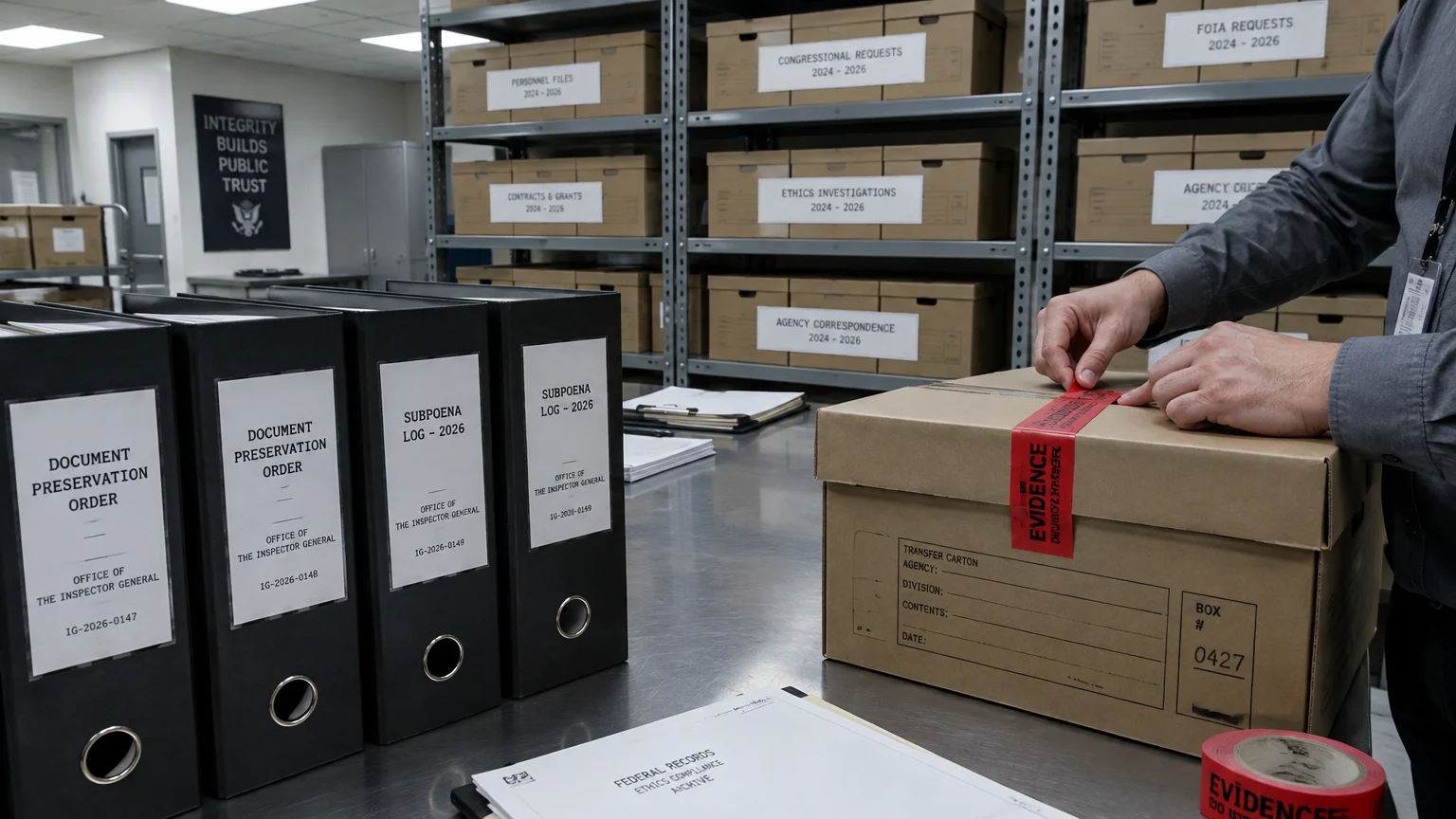
Accountability Lens: Ethics Inquiries and Document Preservations
The Paper Trail Around Mar-a-Lago Access
Ethics watchdogs are focusing intensely on the timeline connecting political money to regulatory relief. Huang attended the $1 million-per-person Mar-a-Lago donor dinner in April 2025 as major policy reviews were underway.
Nvidia followed that event with a $25 million pledge for Trump’s White House ballroom project. Months later, the administration dismantled the AI Diffusion Rule and authorized lucrative H200 sales to China.
Watchdog organizations are filing Freedom of Information Act requests to uncover internal correspondence. Investigators are examining whether administration officials granted regulatory exemptions in exchange for political and financial support.
Good-governance advocates stress that national security export decisions must remain insulated from campaign contributions. The appearance of transactional policy-making provides fertile ground for incoming congressional oversight committees.
Federal law strictly prohibits executive branch officials from leveraging official acts for private or campaign enrichment. If investigators establish a direct link between donations and licensing decisions, legal consequences will follow.
Contradictions Around Intelligence Briefings
The starkest political vulnerability for Trump lies in documented intelligence briefings. Reporting establishes that intelligence officials briefed Trump in October 2025 about Alice Huang’s espionage ties.
Trump publicly claims he has no recollection of those high-level briefings. However, executive branch documentation paints a very different picture of internal awareness.
Ahead of the May 2026 presidential trip to Beijing, Marco Rubio circulated a formal warning memo. That document cited electronic surveillance demonstrating active security risks surrounding Huang and his associates.
Trump permitted Huang to join the diplomatic delegation to China anyway. This paper trail severely undermines the administration’s claims of accidental oversight.
On November 12, 2026, Ranking Members of the Senate Finance Committee and House Ways and Means Committee launched a joint probe. They demanded that Commerce Secretary Howard Lutnick preserve all records regarding Nvidia.
Lawmakers specifically demanded all communications regarding the 25% export fee scheme and Section 232 semiconductor reviews. Concurrently, the Senate Select Committee on Intelligence requested copies of the May 2026 Rubio memo.
The intelligence committee wants to compare internal warnings directly against executive actions. These records will demonstrate whether Trump knowingly disregarded security advice to protect a lucrative commercial partnership.
Frequently Asked Questions
Why did Jensen Huang resign from Nvidia so abruptly?
Huang resigned on November 12, 2026, ending his 33-year tenure as chief executive following an emergency board meeting. His departure followed mounting revelations of serious personal misconduct and counterintelligence vulnerabilities.
Beyond the alleged espionage plot with Megaspeed executive Alice Huang, reports revealed workplace affairs with Vice President Kimberly Powell and another employee. These compounding scandals created unmanageable legal risks and shareholder lawsuits.
Nvidia’s board determined that Huang could no longer effectively lead the company amid expanding federal inquiries. His resignation allowed the enterprise to appoint interim leadership and implement necessary governance reforms.
What specific risks does this scandal pose to Donald Trump?
The scandal directly undermines Trump’s tough-on-China rhetoric and exposes him to charges of compromising national security. Trump approved advanced H200 chip sales to China two months after intelligence briefers warned him about Huang.
Furthermore, Trump accepted significant financial support from Nvidia, including a $25 million pledge for a White House ballroom. Incoming Democratic majorities in Congress plan to use subpoena power to investigate potential conflicts of interest.
If congressional committees uncover evidence that commercial deals superseded counterintelligence cautions, Trump faces severe political damage. This controversy threatens his standing with defense-oriented conservatives and independent voters.
Can Congress subpoena White House intelligence records?
Starting in January 2027, incoming Democratic committee chairs will wield unilateral subpoena authority over executive branch agencies. They can compel testimony from cabinet officials and demand internal agency communications.
While the administration may attempt to assert executive privilege over direct presidential conversations, communications involving outside corporate executives enjoy limited legal shielding. Lawmakers are aggressively targeting correspondence between Nvidia and political appointees.
Committees can also subpoena agency records from Commerce, State, and Justice that do not involve direct presidential communications. Marco Rubio’s May 2026 memo represents a prime target for formal legislative demands.
How does the 25 percent export fee mechanism work?
Established in December 2025, the policy allows Nvidia to export advanced H200 artificial intelligence chips to approved buyers in China. In exchange, the federal government receives a 25% cut of all export sales revenue.
The Senate Finance Committee is investigating whether this arrangement represents an unlawful, unauthorized export tax scheme. Critics argue the revenue stream gave the White House a financial motive to overlook national security risks.
If courts or Congress declare the export fee unlawful, the administration’s semiconductor trade strategy will collapse. Lawmakers demand complete disclosure of how much revenue the federal government collected through this mechanism.
Closing Brief: Key Milestones to Watch Next
As this crisis unfolds, you must track several critical events across Washington and Wall Street. The most immediate flashpoint will be Jensen Huang’s sworn testimony before the House Foreign Affairs Committee.
You should watch how aggressively Republican Chairman Brian Mast conducts this initial hearing. Mast’s line of questioning will signal whether congressional Republicans intend to defend the administration or conduct independent oversight.
The broader investigative storm will hit Washington in January 2027 when Democrats assume committee leadership. Subpoenas for Marco Rubio’s May 2026 memo and White House visitor logs will reveal the administration’s internal calculations.
At the Department of Justice, Attorney General Todd Blanche must conclude the espionage investigation into Alice Huang. Any formal indictments will severely complicate diplomatic negotiations between Washington and Beijing.
Regulators will also advance their investigation into Megaspeed’s $4.8 billion semiconductor stockpile. That inquiry will expose whether illicit diversion networks managed to circumvent federal export controls systematically.
In the private sector, interim chief executive Colette Kress faces the task of stabilizing Nvidia’s cratered valuation. The company must navigate federal shareholder class-action lawsuits in California while managing heightened geopolitical scrutiny.
Harvey C. Jones must also implement rigorous internal governance standards to restore board oversight. His decisions regarding executive compensation and legal defense funds will influence shareholder sentiment.
The coming months will test the institutional guardrails of American trade and national defense. If you hold technology investments or follow foreign policy, this scandal will define Washington’s agenda for months to come.
Stay vigilant as documents are released and hearings commence. The political and economic reverberations of this Silicon Valley scandal are only beginning to reshape American governance.