
You pay vastly different prices at the pump depending on how your state legislature funds its roads. While drivers in some regions face steep levies, ten states keep their statutory motor fuel taxes at historic lows.
These bottom-tier rates reflect intense lobbying battles between commercial haulers, fossil fuel producers, and highway construction coalitions. Understanding these policy choices reveals who truly subsidizes state transportation budgets.
Beneath the retail price per gallon lies a complex political money trail that shapes infrastructure across the country. Here is how your state tax ranks and where the underlying cash flows.
Flashpoint: The Lobbying War Over Motor Fuel Taxes
Global crude oil prices exceeding $105 per barrel sparked fierce legislative battles across state capitols in 2026. Rather than addressing highway trust fund solvency, governors and lawmakers rushed to shield drivers from surging retail costs.
Energy political action committees poured millions into statehouse campaigns to block statutory rate increases. According to Federal Election Commission filings and state records, fossil fuel trade groups framed fuel taxes as an unnecessary financial penalty on working families.
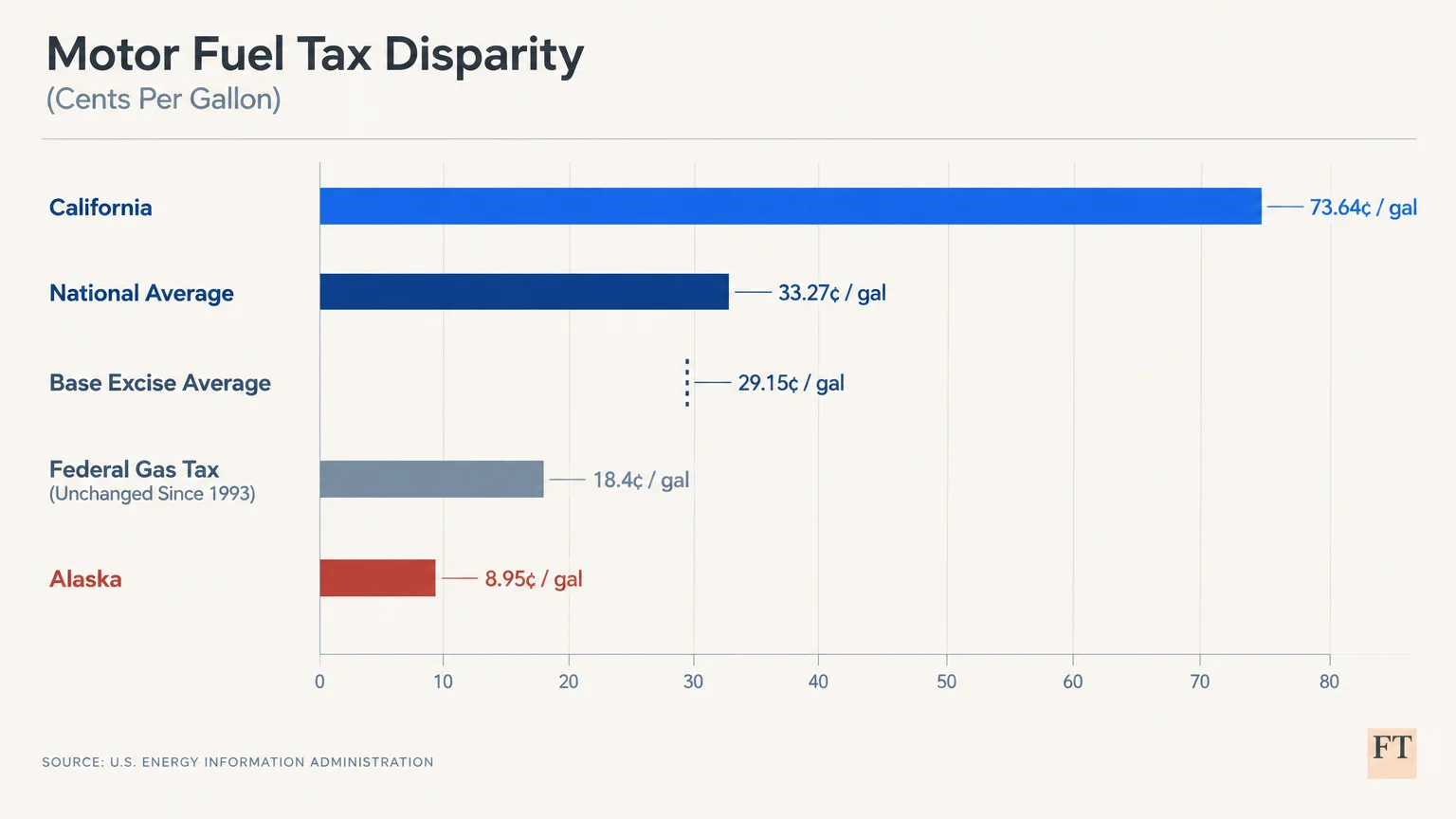
At the federal level, the standard gasoline excise tax remains locked at 18.4 cents per gallon; it has not moved since October 1993. The baseline federal diesel excise tax sits at 24.4 cents per gallon.
Due to severe energy price spikes in 2026, President Trump authorized the highway use of tax-free dyed diesel. The administration also deferred the federal diesel excise tax through the end of 2026.
According to U.S. Energy Information Administration data, 26 states altered their gasoline tax rates between January 2025 and January 2026. Nineteen states enacted statutory increases to counter inflation, while seven states lowered them.
These shifting state policies highlight a sharply divided nation. While certain states raised motor fuel rates above 70 cents per gallon, ten states aggressively protected rock-bottom rates established decades ago.
The Ten States With the Lowest Statutory Gas Taxes
Total state taxes and mandatory fuel fees averaged 33.27 cents per gallon nationwide as of January 2026. When you isolate base state excise taxes, the national average drops to 29.15 cents per gallon.
California levies the highest state gasoline tax in the nation at 73.64 cents per gallon as of July 1, 2026. Illinois ranks second, charging between 70.4 and 71.7 cents per gallon.
The following rankings track total statutory state-level motor fuel taxes and mandatory fees effective July 1, 2026. These figures exclude the 18.4-cent federal tax, temporary holiday suspensions, and local county-level options.
1. Alaska: 8.95 Cents Per Gallon
Alaska levies the lowest gasoline tax in the country at a statutory base rate of 8.95 cents per gallon. The state imposes no general state sales tax and ranks fiftieth in overall fuel tax burdens.
Decades of bountiful oil extraction royalties allowed Alaska to finance public infrastructure without relying on traditional motor fuel excise taxes. Consequently, any legislative attempt to raise the 8.95-cent benchmark provokes immediate public resistance.
Legislative proposals seeking to increase Alaska’s rate have repeatedly stalled in committee without receiving floor votes. Watchdogs note that energy exploration executives routinely contribute to the campaign accounts of key state lawmakers in Juneau.
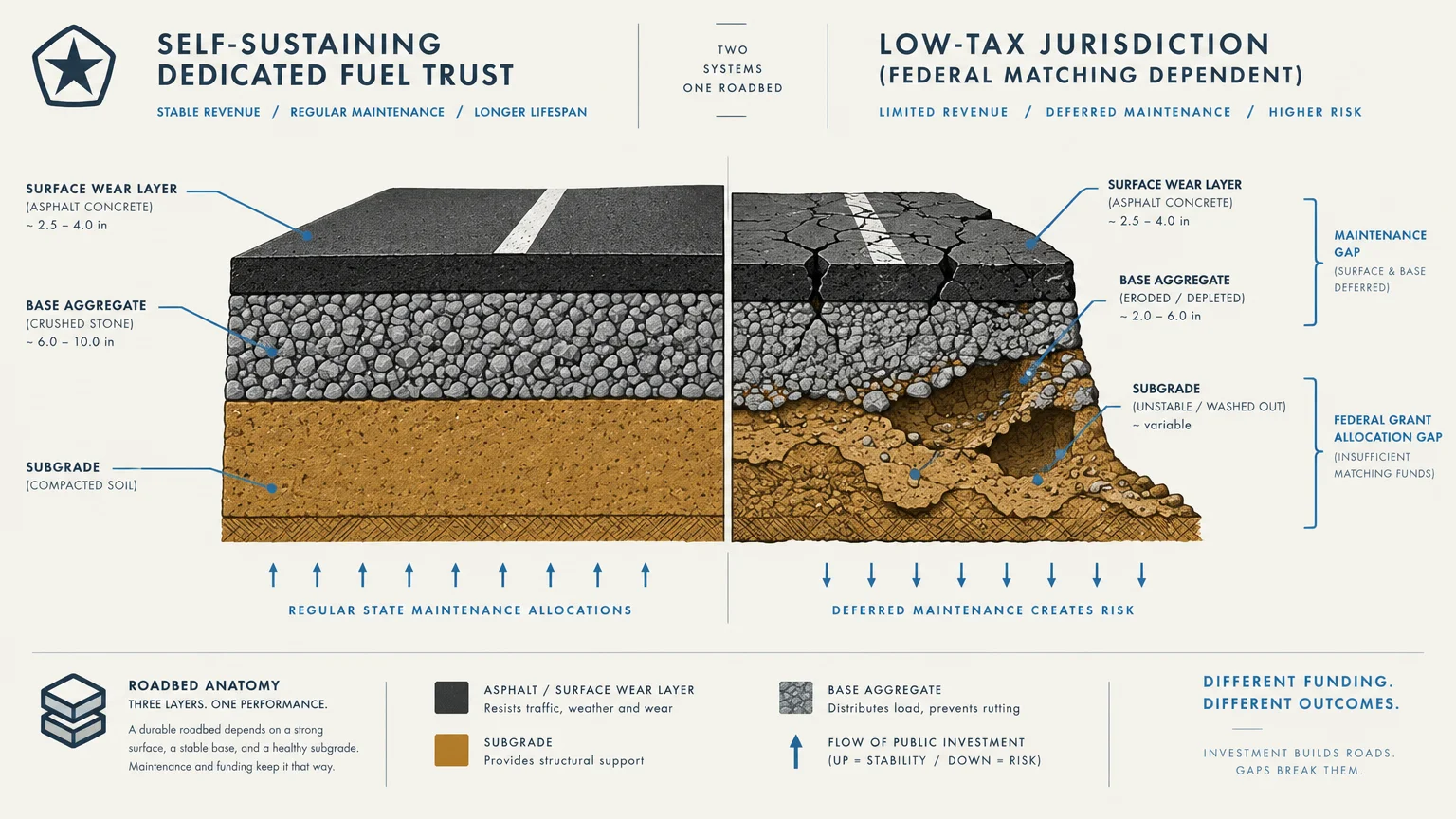
Without sufficient fuel tax revenue feeding its highway accounts, Alaska relies heavily on federal matching funds to maintain roadbeds. When federal infrastructure funding fluctuates, state highway maintenance suffers noticeable delays.
2. Hawaii: 18.50 Cents Per Gallon
Hawaii claims the second-lowest statutory state rate with an 18.50-cent total per-gallon levy. This statutory total combines a 16.00-cent base excise tax with 2.50 cents in mandatory state environmental and inspection fees.
You must not mistake this low state figure for an inexpensive receipt at the gas station. Hawaii allows individual county governments to levy substantial local fuel taxes on top of the state rate.
These county-level levies frequently double the total tax burden borne by island motorists. Isolated Pacific supply chains and maritime shipping rules also push baseline wholesale fuel prices to nation-leading highs.
State ethics filings reveal active lobbying by maritime freight distributors and regional fuel wholesalers. Lawmakers keep the statutory state tax rate low to avoid political blame for elevated retail pump prices.
3. New Mexico: 18.88 Cents Per Gallon
New Mexico holds the third spot with a total state fuel charge of 18.88 cents per gallon. The rate includes a 17.00-cent base excise tax and a 1.88-cent petroleum products loading fee.
Unprecedented oil and natural gas production in the Permian Basin generated historic budget surpluses in Santa Fe. These severance revenues allow lawmakers to avoid increasing retail fuel taxes on everyday consumers.
Campaign finance filings show that independent energy PACs direct substantial donations to both legislative parties. These contributions help maintain a favorable tax climate across the state’s extraction and refining industries.
Heavy commercial equipment causes extensive pavement degradation along rural energy transport routes. Because fuel tax rates remain low, the state covers road restoration by transferring cash directly out of the general fund.
4. Arizona: 19.00 Cents Per Gallon
Arizona charges an 18.00-cent base excise tax and a 1.00-cent underground storage tank fee, producing a 19.00-cent total levy. The statutory base excise rate has remained unchanged since 1991.
A voter-approved constitutional provision requires a two-thirds supermajority in both legislative chambers to pass any state tax hike. This structural hurdle allows small anti-tax caucuses to defeat fuel fee adjustments easily.
Commercial trucking firms and fuel marketing trade groups spend heavily each legislative session to protect this threshold. Their political action committees regularly contribute to legislative leadership funds in Phoenix.
Inflation has severely degraded the purchasing power of Arizona’s 18-cent base rate over three decades. To bridge the gap, counties increasingly turn to regional sales tax surcharges to finance highway construction projects.
5. Oklahoma: 20.00 Cents Per Gallon (Tied)
Oklahoma shares fifth place with a total state motor fuel tax of 20.00 cents per gallon. This figure comprises a 19.00-cent base excise tax and a 1.00-cent environmental and storage fee.
Petroleum exploration companies and convenience store lobbies wield immense political power in the Oklahoma State Capitol. Lobbying disclosures confirm steady hospitality spending and campaign contributions targeted at members of transportation committees.
Instead of adjusting fuel fees to match inflation, Oklahoma lawmakers routinely shift general sales and income taxes toward bridge repairs. This fiscal approach protects commercial shippers from paying proportional road-use fees.
Watchdog groups point out that independent conservative expenditure committees launch aggressive campaigns against any incumbent who proposes fuel rate revisions. Consequently, lawmakers view raising the fuel tax as political suicide.
6. Texas: 20.00 Cents Per Gallon (Tied)
Texas ties Oklahoma with a flat statutory motor fuel excise tax of 20.00 cents per gallon. The Texas Legislature last raised this rate in September 1991.
Rapid economic growth and heavy commercial freight require the Texas Department of Transportation to execute massive highway expansions. However, raising the 20-cent statutory excise levy remains an absolute red line in Austin.
Conservative political advocacy networks and energy donors pledge primary opposition against any legislator supporting a fuel fee hike. Multi-million-dollar contributions flow through state-level political action committees to enforce this fiscal discipline.
According to state campaign finance disclosures, top energy donors direct significant funds into statewide campaigns every two years. These contributions ensure that transportation funding debates focus on general revenue diversions rather than tax hikes.
To fund infrastructure without touching the gas tax, Texas voters approved constitutional amendments redirecting oil severance taxes and sales taxes to the highway fund. This mechanism shifts infrastructure funding onto broad revenue streams.
7. Louisiana: 20.93 Cents Per Gallon
Louisiana levies a total state fuel charge of 20.93 cents per gallon. The tax consists of a 20.00-cent base excise rate combined with 0.93 cents in inspection and environmental fees.
Louisiana’s Mississippi River corridor serves as a major national refining and petrochemical processing hub. Industry lobbyists maintain continuous presence in Baton Rouge to defeat legislation that would increase motor fuel levies.
State legislative efforts to link fuel taxes to construction inflation indices have repeatedly failed under sustained business lobbying. Lawmakers cite high poverty rates to justify voting against pump fee increases.
Meanwhile, the state grapples with an infrastructure backlog running into tens of billions of dollars. Aging coastal bridges and vital evacuation arteries frequently go without critical upgrades due to chronic funding shortfalls.
8. Delaware: 23.00 Cents Per Gallon
Delaware ranks eighth with a flat statutory fuel excise tax of 23.00 cents per gallon. The state has maintained this exact statutory rate for years without enacting automated inflation adjustments.
Delaware handles massive volumes of out-of-state passenger and freight traffic traveling along the busy Interstate 95 Northeast corridor. State officials capture highway revenue primarily through turnpike toll plazas rather than in-state fuel taxes.
Delaware campaign finance filings show routine contributions from civil engineering firms and road contractors to gubernatorial and legislative leaders. These donors advocate for issuing toll-backed transportation bonds instead of raising fuel taxes.
This debt-financing approach shields local drivers from legislative tax fights at the gas pump. However, escalating bond repayment obligations consume a growing percentage of Delaware’s dedicated transportation trust fund.
9. North Dakota: 23.03 Cents Per Gallon
North Dakota charges 23.03 cents per gallon in total state motor fuel taxes. The statutory levy combines a 23.00-cent base excise tax with a 0.03-cent administrative fee.
Extensive hydraulic fracturing in the Bakken formation generates substantial oil extraction tax revenues for the Bismarck state government. Lawmakers allocate chunks of these severance tax receipts to rebuild heavy truck corridors across western counties.
Energy trade associations maintain aggressive lobbying operations in the state capitol. They argue that high severance taxes already fund state infrastructure, eliminating the need to raise consumer fuel taxes.
This arrangement keeps pump taxes modest while preserving commercial goodwill with drilling contractors. However, state road funding remains exposed to sudden drops in global crude oil valuations.
10. New Hampshire: 23.75 Cents Per Gallon
New Hampshire rounds out the bottom ten with a total rate of 23.75 cents per gallon. The figure includes a 22.20-cent base road toll and 1.55 cents in oil discharge cleanup fees.
New Hampshire politics emphasize the traditional political pledge opposing broad-based sales or personal income taxes. Consequently, conservative advocacy groups treat any effort to raise the road toll as a direct violation of fiscal principles.
State lobbying registrations show active monitoring by small business associations and taxpayer advocacy groups. These organizations orchestrate grassroots campaigns whenever lawmakers propose adjusting the road toll to match regional inflation.
While neighboring New England states raised fuel levies to address deteriorating bridges, New Hampshire held the line. The state offsets maintenance shortfalls through turnpike toll surpluses and federal grants.
Statutory Contenders and Near-Miss States
Several states narrowly missed the statutory bottom ten due to mandatory administrative fees. Colorado levies a base excise tax of 22.00 cents per gallon, which would otherwise place it eighth.
However, Colorado imposes mandatory state environmental and petroleum inspection fees totaling 8.18 cents. Those fees bring its total state charge to 30.18 cents per gallon as of July 2026.
Nevada ranks eleventh nationwide with a 23.00-cent base tax and 23.81 cents in total statutory state levies. Wyoming follows in twelfth place with a total state tax rate of 24.00 cents per gallon.
Mississippi previously ranked among the ten lowest states at 21.40 cents per gallon. A statutory increase enacted in 2026 raised Mississippi’s total rate to 24.40 cents, pushing the state into thirteenth place.
The Pump Price Paradox: When Low Taxes Do Not Mean Cheap Gas
You cannot assume that a low statutory state gas tax leads to cheap fuel at your local pump. Wholesale refinery margins, geographic logistics, and boutique fuel blends heavily influence final retail prices.
Hawaii charges the second-lowest statutory state rate at 18.50 cents, but it regularly posts among the nation’s highest pump prices. Island supply constraints, local county taxes, and maritime shipping laws inflate retail costs.
Nevada demonstrates a similar discrepancy with an eleventh-ranked 23.81-cent state rate and retail pump prices that consistently rank among the top six nationwide. The state imports refined fuel from California refineries and requires stringent environmental blends.
Conversely, Texas and Oklahoma offer both bottom-ten statutory taxes and some of the cheapest retail gas in the nation. Proximity to Gulf Coast refineries and extensive pipeline grids minimizes regional transportation overhead.
When tracking transportation money, you must distinguish between statutory excise levies and the retail price on the marquee. Politicians highlight low tax rates while ignoring regulatory costs that boost pump totals.
Emergency Suspensions: The 2026 Gas Tax Holidays
Crude oil price surges in 2026 led several states to enact emergency tax holidays or rate freezes. These temporary maneuvers created artificially low rates that altered the state tax map.
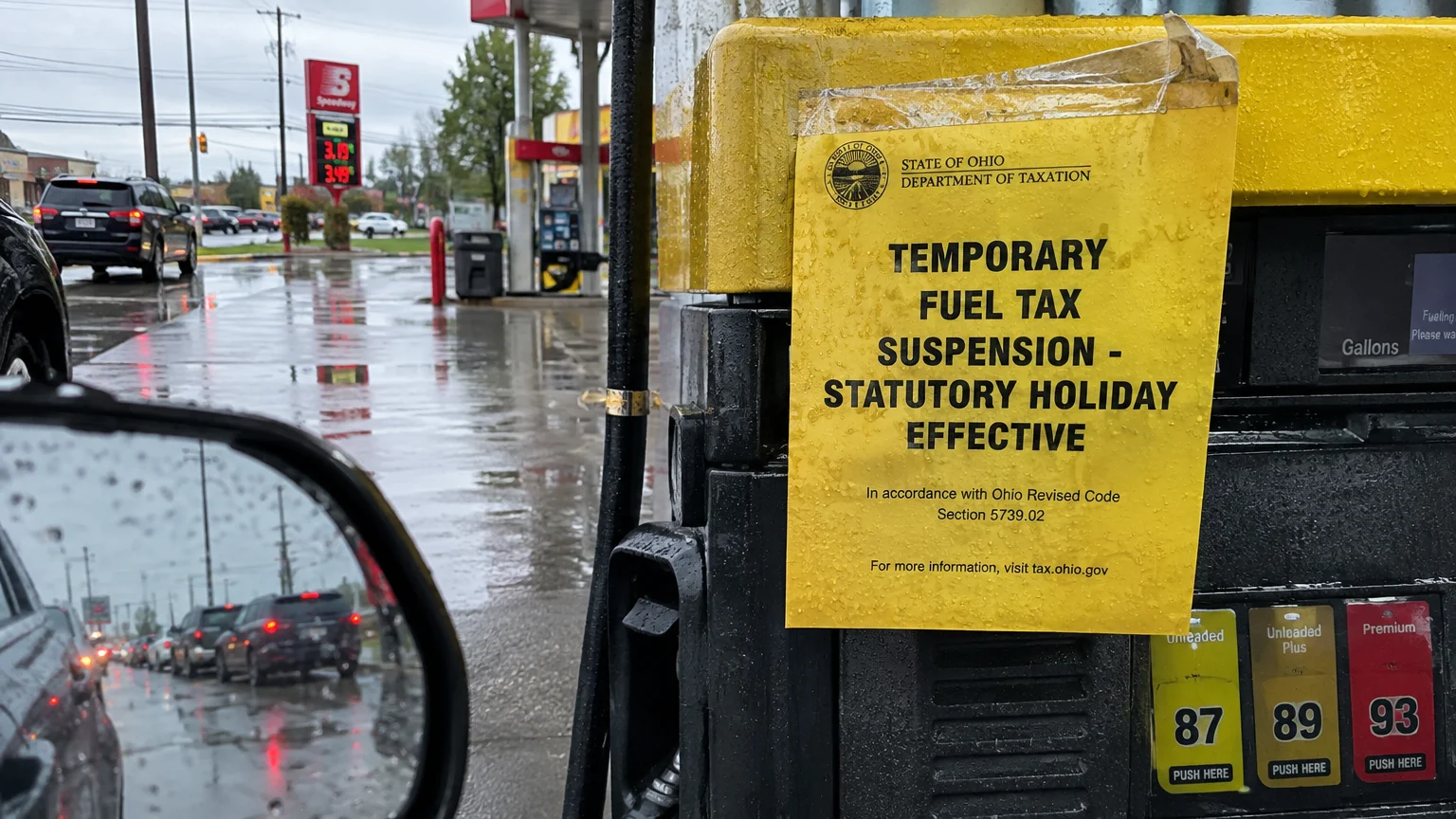
Under House Bill 519, signed by Governor Mike DeWine on October 1, 2026, Ohio enacted a 90-day gas tax holiday. From October 4, 2026, through January 2, 2027, Ohio slashed its 38.5-cent excise tax to 0.01 cents per gallon.
Georgia Governor Brian Kemp signed House Bill 1199 on March 20, 2026, suspending Georgia’s motor fuel excise tax of 33.3 to 34.05 cents per gallon. The governor extended this holiday through early November 2026.
Beginning April 8, 2026, Indiana Governor Mike Braun issued emergency executive orders suspending Indiana’s 7% sales tax on fuel and statutory gasoline excise taxes. The administration extended those orders through December 4, 2026.
Illinois lawmakers enacted Public Act 104-0468, freezing the scheduled July 1, 2026 rate hike through December 31, 2026. Kentucky, North Carolina, and Utah similarly implemented statutory freezes to halt automated tax increases.
These temporary tax holidays provide immediate political relief for elected officials facing voter frustration over energy costs. However, they starve state transport trust funds of dedicated capital required for scheduled bridge repairs.
Source Map: The Donors and PACs Protecting Low Fuel Levies
Preserving statutory fuel tax rates requires sustained political spending by well-organized commercial interests. Examining records from state ethics agencies and state political contributions databases reveals who bankrolls these efforts.
Independent petroleum marketing associations represent fuel wholesalers, convenience stores, and pipeline distributors. These trade associations maintain active state PACs that donate heavily to legislative leaders and transport committee members.
Commercial trucking associations represent another critical pillar in the coalition opposing fuel tax increases. Because commercial freight carriers consume millions of gallons annually, slight tax increases produce massive operational expense jumps.
National 501(c)(4) social welfare groups pour dark money into primary races to intimidate lawmakers considering tax adjustments. These groups fund mailers attacking legislators who sponsor fuel fee indexing as wasteful spenders.
Highway contractor groups and civil engineering lobbies form the countervailing political force. They finance infrastructure coalitions and donate to legislative campaigns to demand dedicated state road funding.
This competition between fuel retailers and roadway contractors often creates legislative gridlock. Lawmakers routinely compromise by shifting surplus general revenues into transportation rather than raising user fees.

Influence Mechanisms: Converting Cash into Legislative Stalemate
Special interest campaign contributions shape state transportation policy long before bills reach a floor vote. Access to committee leadership represents the primary advantage secured by industry donors.
Lobbyists representing petroleum and freight interests draft model bills that impose strict voter referendum mandates on gas tax increases. Lawmakers frequently sponsor these industry-drafted bills to burnish their fiscal credentials.
Trade groups also launch coordinated public relations campaigns during legislative budget debates. These advertisements frame user-fee increases as harmful burdens on rural commuters who must drive long distances for work.
Privately sponsored policy retreats provide industry executives direct access to legislative budget writers. Energy associations often sponsor these events, allowing corporate representatives to present alternative funding proposals in private.
Independent expenditure PACs serve as political enforcers during primary elections. When a lawmaker votes to raise fuel taxes, these political committees finance aggressive primary challengers to punish the defection.
Accountability Tracking: EV Adoption and Trust Fund Solvency
The traditional motor fuel excise tax relies on a direct user-fee structure: drivers who travel roadways fund their repair. Today, changing vehicle technology threatens the financial foundation of this long-standing mechanism.
An April 2026 EIA analysis reported that U.S. gasoline consumption fell 1% in 2025 even as vehicle-miles traveled rose 1.2%. Rising electric vehicle adoption and fleet efficiency gains of approximately 1% annually drive this revenue decline.
Electric vehicle owners use the roadway network without purchasing gasoline or paying statutory fuel excise taxes. This shift leaves state highway trust funds with declining revenue streams per vehicle-mile traveled.
To replace lost revenue, thirty-three state legislatures instituted special annual registration surcharges on electric and hybrid vehicles. Watchdogs argue that flat annual fees unfairly penalize low-mileage EV owners while sparing heavy commercial haulers.
State departments of transportation are testing pilot programs that track vehicle-miles traveled directly. However, privacy concerns and tracking software costs continue to slow widespread implementation of mileage-based user fees.
Legislative audit reports reveal growing structural deficits in dedicated highway accounts across all ten low-tax states. Lawmakers face an inevitable choice between raising excise fees, taxing vehicle mileage, or draining public funds.
Public Impact: Who Truly Pays for Stagnant Fuel Rates?
Living in a state with low gas taxes may seem like a financial win when you fuel your car. However, the true costs of stagnant fuel revenues frequently surface in other areas of your budget.
Independent transportation research shows that driving on poorly maintained roads costs American motorists hundreds of dollars annually in accelerated wear, blown tires, and suspension repairs. You pay your auto mechanic instead of paying the tax collector.
When statehouses divert sales and income taxes to backfill highway shortfalls, the tax burden shifts away from road users. Transit commuters, remote workers, and non-drivers end up subsidizing highway freight corridors they never use.
States that refuse to raise statutory excise taxes increasingly rely on tolling authorities and private-public infrastructure partnerships. Private toll roads levy substantial per-mile fees that easily outstrip statutory gas tax costs.
Scrutinizing transportation finances allows you to see past political rhetoric regarding cheap fuel. Frozen statutory gas taxes often result in deteriorating pavement, toll proliferation, and diverted general tax dollars.
Frequently Asked Questions: Tracing Transportation Cash Trails
How does coordinated spending bypass contribution limits in state fuel tax campaigns?
Independent expenditure political committees are legally prohibited from coordinating strategy with candidate campaigns. However, operative networks lawfully align their efforts by utilizing common vendors, sharing polling data, and synchronizing public advertising themes.
Dark money 501(c)(4) groups run issue-advocacy advertisements that attack a lawmaker’s fuel tax voting record without using explicit express-advocacy slogans. This messaging tactic permits unlimited corporate spending while bypassing candidate contribution ceilings.
What limits govern Super PAC spending on state transportation initiatives?
Under governing constitutional precedent, independent Super PACs face no caps on the financial contributions they collect from corporations, unions, or wealthy individuals. They may spend unlimited amounts as long as they operate independently from formal campaigns.
State-level Super PACs inject substantial capital into ballot referendum campaigns addressing fuel taxes and transportation bonds. Their donor disclosures often list intermediate LLC entities, obscuring the true corporate backers from public view.
Where are the biggest disclosure gaps in state-level lobbying records?
Many state disclosure statutes require lobbyists to report gross compensation while exempting itemized records for legislative dining, entertainment, and travel. These reporting exemptions shield specific gifts and private meetings from public oversight.
Furthermore, major lobbying firms routinely register broad client rosters without reporting exactly which client requested specific fuel tax bill amendments. This practice prevents voters from identifying which corporations altered tax statutory language.
Which nonpartisan watchdog tools can you use to track infrastructure lobbying?
You can analyze political donor trails across state legislatures using Tax Foundation benchmark studies and databases managed by OpenSecrets. These public platforms cross-reference corporate campaign contributions with legislative committee assignments and roll-call votes.
State ethics commission portals provide downloadable lobbyist activity filings, client lists, and expenditure declarations. Reviewing these state registries lets you track which commercial lobbies actively fight statutory fuel tax adjustments.
The Watchlist: Upcoming Deadlines, Audits, and Legislative Battles
Watchdog readers should monitor several critical statutory deadlines and regulatory filings over the coming months. These events will signal whether temporary tax relief measures become permanent policy shifts.
Ohio’s 90-day gas tax holiday authorized under House Bill 519 officially concludes on January 2, 2027. Lawmakers in Columbus must choose whether to allow the 38.5-cent rate to resume or find alternative funds to extend the break.
Indiana’s emergency executive suspension of its 7% fuel sales tax expires on December 4, 2026. State officials must decide whether to extend the emergency declaration or let statutory tax collection restart.
At the federal level, the executive deferral of the 24.4-cent diesel excise tax terminates at the end of 2026. The freight trucking lobby will pressure federal lawmakers to convert this temporary relief into permanent tax reform.
Upcoming state ethics filing deadlines will reveal the campaign finance totals raised by transportation committee members across all ten low-tax states. Reviewing these reports helps you follow the money shaping road policy.